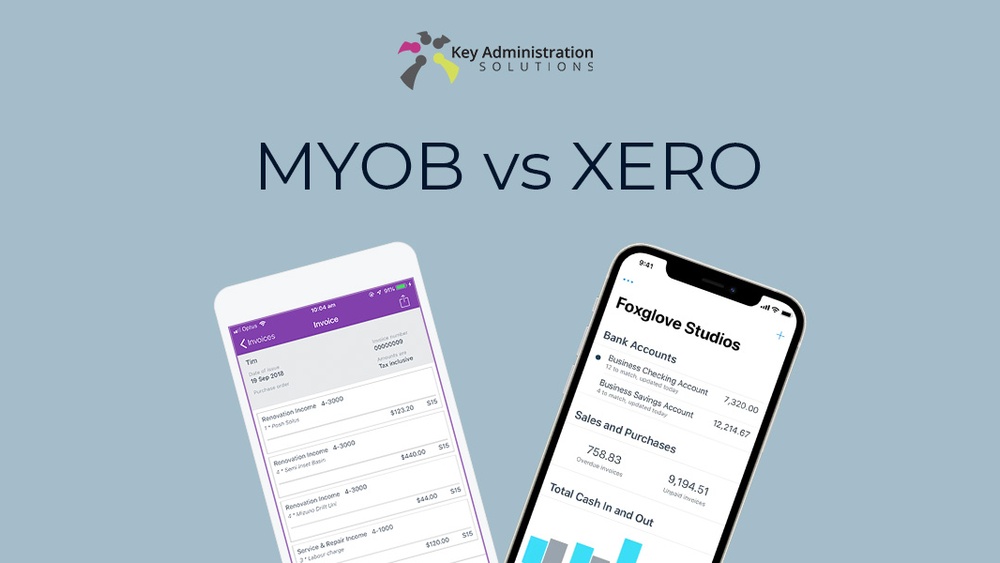

Choosing the right accounting software can feel overwhelming. You want something that saves you time, keeps your finances clear, and grows with your business.
That’s why you’re here—trying to decide between MYOB and Xero. Both promise to make your life easier, but which one really fits your needs? You’ll discover the key differences, benefits, and potential drawbacks of each. By the end, you’ll feel confident about which tool will help you take control of your finances and boost your business success.
Keep reading to find out which one matches your goals perfectly.
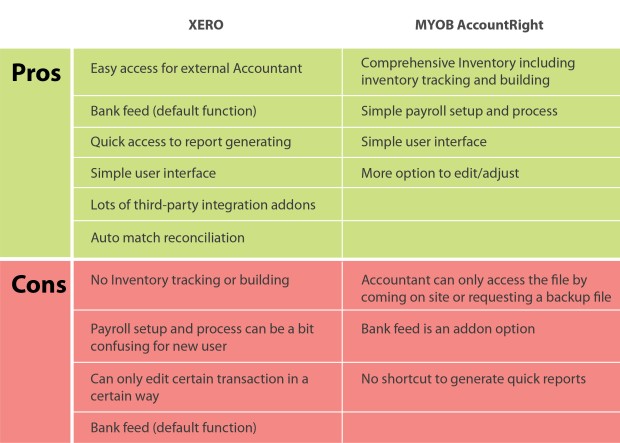
Credit: seedtraining.com.au
Myob Features
MYOB offers a range of features designed to simplify business management. It helps with daily tasks and keeps finances organized. The software suits small to medium businesses needing reliable tools. Its features cover accounting, payroll, inventory, and reporting needs.
Accounting Tools
MYOB provides easy-to-use accounting tools for tracking income and expenses. It supports bank reconciliations and invoice creation. Users can manage bills and payments with minimal effort. The platform ensures accuracy in financial records and helps with tax preparation.
Payroll Management
MYOB simplifies payroll tasks for businesses of all sizes. It calculates wages, taxes, and superannuation automatically. Employees’ pay slips are generated quickly and accurately. The software keeps payroll compliant with government rules. It also tracks leave and attendance.
Inventory Tracking
MYOB helps monitor stock levels and product details. Users can add, update, and remove items easily. It tracks sales and purchases to avoid stock shortages. The system alerts when inventory runs low. This feature supports better stock control and planning.
Reporting Capabilities
MYOB generates clear reports to understand business performance. Financial statements and cash flow reports are available on demand. Users can customize reports to focus on key data. These insights assist in making informed decisions. Reports are easy to read and share with others.
Xero Features
Xero is a popular accounting software designed for small and medium businesses. It offers many features that help manage finances easily. These features make bookkeeping faster and reduce errors. Xero works well for business owners who want clear financial insights.
Cloud-based Accounting
Xero stores all your data online. This means you can access your accounts anytime and anywhere. It works on computers, tablets, and phones. No need to worry about backups or updates. Xero keeps your information safe and secure in the cloud.
Bank Reconciliation
Xero connects directly to your bank accounts. It imports transactions automatically every day. You can match bank transactions with your records quickly. This saves time and helps spot mistakes early. The reconciliation process is simple and clear.
Invoicing Options
Xero lets you create professional invoices easily. You can customize the look to fit your brand. Send invoices by email and track when customers open them. Set up automatic reminders for unpaid bills. It helps improve cash flow and reduce late payments.
Third-party Integrations
Xero works with many other business apps. You can connect tools for payroll, inventory, and sales. This creates a smooth workflow across your software. Integrations reduce manual data entry and save time. Choose apps that fit your business needs.
User Experience
User experience plays a key role in choosing accounting software. It affects how quickly users learn and use the tool. Both MYOB and Xero focus on making their platforms simple and clear. This helps business owners and accountants save time and avoid mistakes.
Interface Design
MYOB offers a clean and structured interface. Menus are easy to find and well organized. Xero has a modern look with bright colors. Its dashboard shows important info right away. Both platforms avoid clutter, making navigation smooth.
Ease Of Use
MYOB guides users step-by-step through tasks. It suits beginners with limited accounting knowledge. Xero provides quick access to common actions. It lets users complete tasks in fewer clicks. Both tools focus on reducing complexity.
Mobile Accessibility
MYOB has a mobile app for managing finances on the go. Users can send invoices and check reports anytime. Xero’s app offers similar features plus bank reconciliation. Both apps work well on phones and tablets. This helps users stay updated wherever they are.

Credit: www.accountagility.co.nz
Pricing And Plans
Understanding the pricing and plans of MYOB and Xero helps you choose the right software. Both offer different options tailored to various business needs. Knowing what each plan includes is important before making a decision.
Subscription Costs
MYOB and Xero have monthly subscription fees. MYOB plans usually start at a lower price for basic features. Xero’s pricing tends to be slightly higher but offers more automation tools. Both platforms allow you to pick plans based on your business size and needs.
Free Trial Availability
Both MYOB and Xero offer free trials. MYOB gives a 30-day free trial to test its features. Xero also provides a 30-day free trial with full access. These trials let you explore the software without any risk or payment.
Value For Money
MYOB suits small businesses with simple accounting needs. It offers essential tools at a budget-friendly price. Xero delivers more advanced features, ideal for growing businesses. Its automation saves time and reduces errors. Both provide good value depending on your requirements.
Customer Support
Customer support plays a big role in choosing accounting software. Both MYOB and Xero provide support to help users solve problems fast. Good support saves time and reduces stress. Understanding what support each offers helps users pick the right tool.
Help Resources
MYOB and Xero offer many help resources. They have online guides, tutorials, and FAQs. These resources explain common tasks clearly. Users can find step-by-step instructions easily. This helps users fix issues by themselves.
Response Time
Response times differ between MYOB and Xero. Xero tends to reply quickly through live chat and email. MYOB offers phone and email support but may take longer. Fast replies matter for urgent accounting questions.
Community And Forums
Both platforms have active user communities. Users share tips, tricks, and solutions in forums. Xero’s community is large and very active. MYOB’s forums provide useful advice from real users. Community support adds extra help beyond official channels.
Security And Compliance
Security and compliance are key factors for any business software. Both MYOB and Xero understand this well. They keep your financial data safe and meet legal rules. This section explores how each platform protects your information and stays compliant with laws.
Data Protection
MYOB and Xero use strong methods to protect your data. They encrypt information to stop unauthorized access. Both platforms run regular security checks. This helps find and fix weak spots fast. Your financial data stays private and secure.
Regulatory Compliance
Each software follows strict rules for financial reporting. They comply with tax laws in different countries. This ensures your business meets government requirements. Both update their systems to match new regulations. You can trust their tools for legal compliance.
Backup And Recovery
Data loss can hurt any business. MYOB and Xero offer automatic backups. Your data is saved safely in the cloud. If problems happen, you can restore information quickly. This minimizes downtime and protects your records.
Suitability For Business Types
Choosing the right accounting software depends on the type of business you operate. Myob and Xero serve different needs and industries. Understanding their suitability helps in making a smart choice. This section breaks down their fit for various business types.
Industry Fit
Myob suits businesses in retail, construction, and hospitality well. It offers features tailored to inventory and job tracking. Xero works great for service industries and freelancers. It supports invoicing, time tracking, and online payments smoothly.
Business Size Compatibility
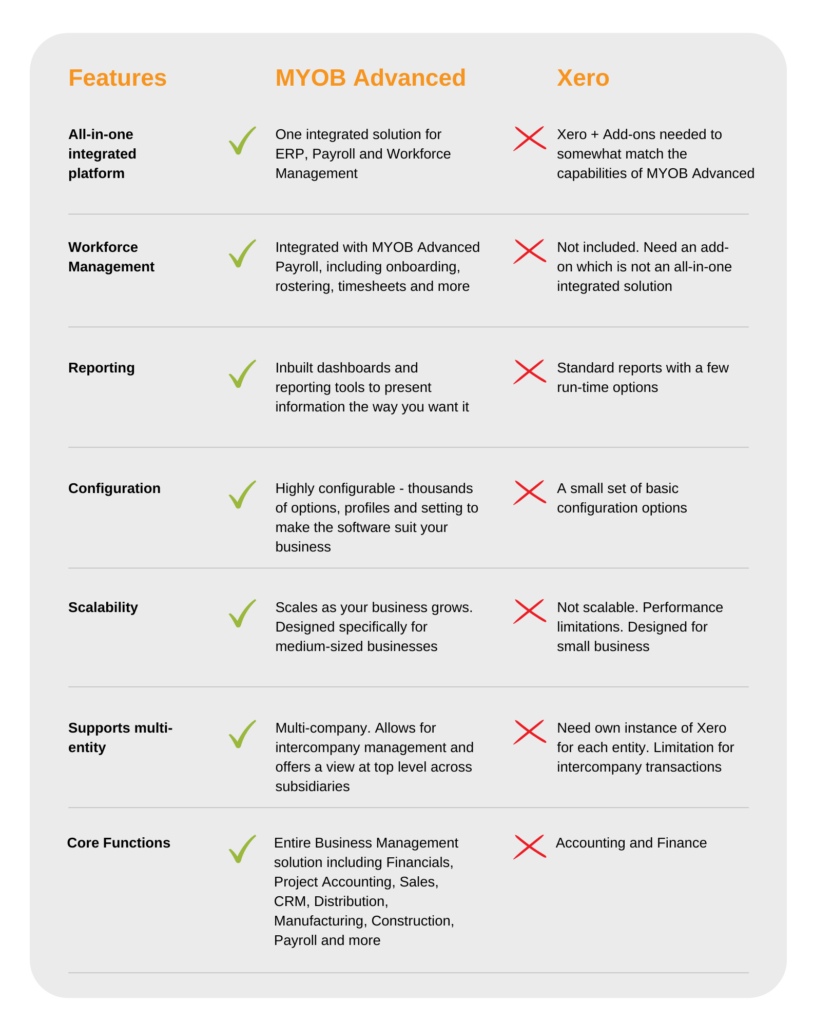
Small businesses find both Myob and Xero easy to use. Myob fits micro to small businesses with simple needs. Xero scales well from small to medium businesses. It provides more options for growing teams and complex accounting.
Scalability
Myob offers basic upgrades but may need add-ons for growth. Xero scales better with built-in features and many integrations. It adapts as businesses expand their operations and needs. Choosing software that grows with you saves time and money.
Integration With Other Tools
Integrating accounting software with other business tools saves time and reduces errors. Both MYOB and Xero offer strong options to connect with various systems. This helps businesses keep all information up to date without manual entry.
These integrations improve workflow and make managing finances easier. Choosing software that works well with your existing tools is important. Below are key types of tools that MYOB and Xero integrate with.
Payment Gateways
MYOB and Xero connect with popular payment gateways like PayPal and Stripe. This allows payments to be recorded automatically. It helps track sales and cash flow accurately. Customers can pay invoices online, speeding up the payment process.
Automatic updates reduce manual data entry and errors. Both platforms support multiple currencies, useful for international sales. Payment gateway integration keeps financial records clean and current.
Crm Systems
Customer relationship management (CRM) systems connect with MYOB and Xero to sync customer data. This integration helps update contacts and sales details in real time. Businesses get a full view of customer transactions and history.
It improves customer service and sales tracking. Popular CRM tools like Salesforce and HubSpot work with both accounting platforms. Syncing CRM and accounting data saves time and avoids duplicate entries.
E-commerce Platforms
MYOB and Xero link to major e-commerce platforms such as Shopify and WooCommerce. Orders, payments, and inventory data flow directly into the accounting system. This eliminates manual entry and errors in sales records.
Inventory levels update automatically, helping manage stock better. Sales tax calculations become more accurate too. E-commerce integration makes accounting smoother for online businesses.
Pros And Cons
Choosing between MYOB and Xero can be challenging. Both offer solid tools for managing business finances. Understanding their pros and cons helps make the right choice. Each has strengths and weaknesses that affect different users.
Myob Advantages
MYOB is known for strong accounting features. It offers robust payroll management for Australian businesses. The software supports complex tax needs well. MYOB works offline with desktop versions. Users get detailed financial reports easily. Its interface is familiar for traditional accountants. Good for small to medium businesses with local needs.
Myob Limitations
MYOB can be hard for beginners to learn. The software updates less frequently than competitors. Mobile app options are limited and less user-friendly. MYOB pricing is higher for advanced features. Integrations with other software are fewer. Cloud features may feel slower compared to others.
Xero Advantages
Xero is cloud-based with easy access anywhere. It offers a clean and simple user interface. Xero supports many third-party app integrations. Invoices and bank feeds sync automatically. It provides real-time financial data. The mobile app is strong and user-friendly. Ideal for startups and small businesses with remote teams.
Xero Limitations
Xero’s payroll features vary by country and can be limited. It may require more training for advanced accounting tasks. Monthly subscription costs can add up for larger teams. Reporting tools are not as detailed as some need. Offline access is not available due to its cloud nature.
Choosing The Right Software
Choosing the right accounting software is a key step for any business. It affects how you track money, manage invoices, and handle taxes. Picking the best option can save time and avoid errors.
MYOB and Xero are popular choices. Each has features that suit different business needs. Understanding these can help you make a smart decision.
Assessing Business Needs
Start by listing what your business requires from software. Do you need help with payroll, inventory, or invoicing? Consider the number of users who will access the system. Look for features that match your daily tasks. Simple tools work well for small businesses. Larger companies might need advanced options.
Budget Considerations
Think about how much money you can spend each month. MYOB and Xero offer various pricing plans. Check what each plan includes. Avoid paying for features you won’t use. Balance cost with the benefits you get. Remember, cheaper is not always better. Quality software can reduce mistakes and save money over time.
Future Growth Plans
Plan for your business’s future size and needs. Will your company grow quickly? Choose software that can scale up easily. It should handle more transactions and users without extra hassle. Look for options that support integration with other tools. This helps keep your business running smoothly as it expands.
Credit: momentumsoftwaresolutions.com.au
Frequently Asked Questions
What Are The Main Differences Between Myob And Xero?
MYOB offers desktop and cloud options, while Xero is cloud-based only. Xero excels in real-time collaboration. MYOB provides industry-specific features. Pricing varies, with Xero often preferred for small businesses due to its simplicity and integrations. Both handle invoicing, payroll, and reporting effectively.
Which Accounting Software Is Best For Small Businesses?
Xero is ideal for small businesses due to its user-friendly interface and extensive app ecosystem. MYOB suits businesses needing industry-specific tools or local compliance features. Both offer scalable solutions, but Xero’s cloud platform supports remote access and collaboration better.
Is Xero Better Than Myob For Payroll Management?
Xero offers seamless payroll integration with automated tax calculations and employee self-service. MYOB provides robust payroll functions tailored to Australian and New Zealand markets. Both are reliable, but Xero’s cloud platform allows easier updates and compliance with payroll laws.
Can Myob And Xero Integrate With Other Business Tools?
Yes, both MYOB and Xero integrate with numerous third-party apps like CRMs, payment gateways, and inventory systems. Xero has a larger app marketplace, offering more integrations. MYOB focuses on essential business tools, making it suitable for specific industries.
Conclusion
Choosing between MYOB and Xero depends on your business needs. Both offer useful tools for managing finances. MYOB suits those who want strong local support. Xero works well for users who prefer cloud access and easy collaboration. Think about your budget, features, and ease of use.
Try free trials to see what feels right. The best choice fits your workflow and helps your business grow steadily. Keep it simple, and pick the software that makes accounting easier for you.
